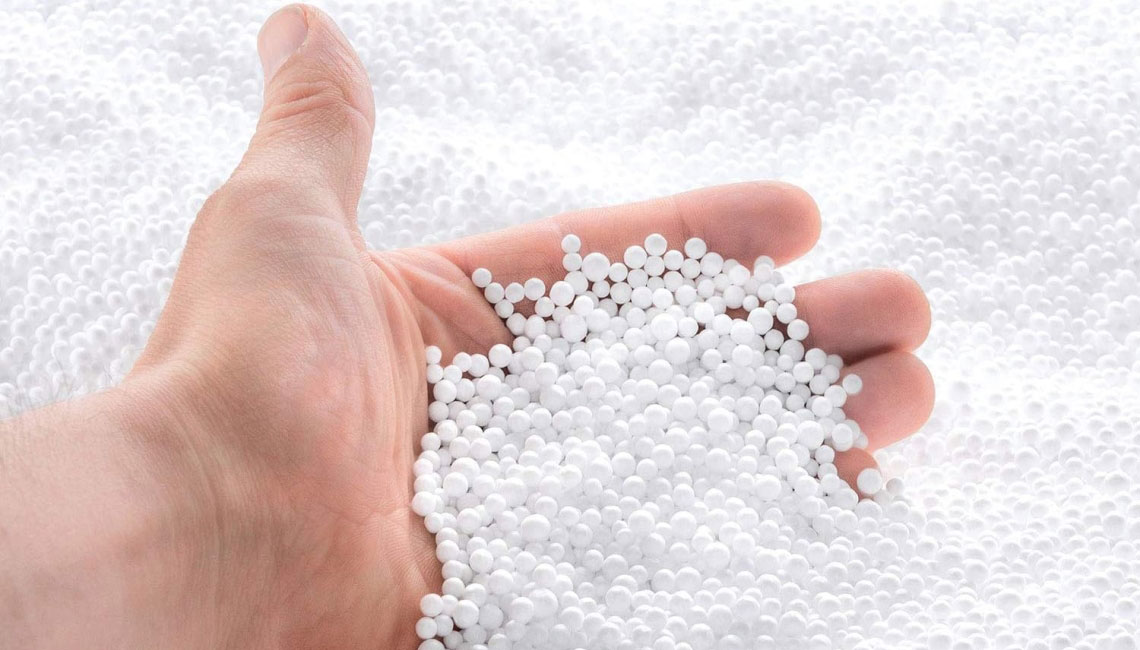

In the high-volume world of Expanded Polystyrene (EPS) manufacturing, waste isn't just a byproduct—it’s a direct drain on your profitability. As a supplier of premium EPS beads, we’ve seen how even minor inefficiencies can snowball into significant financial losses.
Reducing waste requires a holistic approach, starting from the quality of the raw material and extending through every stage of the molding line. Here is a guide on how to tighten your production and maximize your yield.
1. Start with High-Quality Raw Materials
The most effective way to reduce waste is to prevent it from the start. Cheap, inconsistent EPS beads are the primary cause of production failures.
- Uniform Bead Size:Inconsistent bead sizes lead to uneven density and poor fusion, resulting in "voids" or weak spots that force you to scrap the entire part.
- Optimal Pentane Content: Raw materials with degraded blowing agents require higher steam pressures and longer cycles, increasing the likelihood of bead collapse and thermal waste.
2. Master the Pre-Expansion Phase
The pre-expander sets the "DNA" of your final product. If you don't get the density right here, the molding stage will inevitably produce waste.
- Precision Density Control:Use automated weighing and density-control systems to ensure every batch meets your exact specifications. Even a 2% deviation in density can lead to massive material waste over a year of production.
- Proper Aging:Don't rush the silo aging process. Under-aged beads lack internal pressure, leading to shrinkage and "sink marks" in the mold, while over-aged beads lose their fusion capability.
3. Optimize Mold Design and Maintenance
Your molds are precision tools; treating them as such is vital for waste reduction.
- Flash Reduction:Ensure your mold halves seal perfectly. "Flash" (excess material leaking at the seams) is pure waste that requires manual trimming and increases scrap rates.
- Venting Efficiency:Clogged core box vents prevent steam from penetrating the beads evenly. This leads to poor fusion at the center of the part, making it brittle and unsalable.
4. Implement Steam and Energy Management
Waste isn't always physical material; it can also be the energy used to process it.
- Steam Accumulators: Use accumulators to maintain a steady steam pressure. Fluctuating pressure leads to inconsistent molding cycles and a higher percentage of "reject" parts.
- Vacuum Cooling:Shifting from water-only cooling to vacuum-assisted cooling reduces cycle times and prevents "water-logging" of the beads, which can cause warping during the drying stage.
The Economics of Waste: A Quick Comparison
| Waste Source | Cause | Solution |
| Material Scrap | Low-quality raw beads | Switch to premium-grade EPS beads |
| Product Rejects | Inconsistent pre-expansion | Install automated density sensors |
| Energy Loss | Poor steam regulation | Implement steam recovery and vacuum systems |
| Labor Waste | Manual trimming of flash | Optimize mold sealing and maintenance |
5. Close the Loop: In-House Recycling
Even with a perfect process, some scrap is inevitable (such as start-up pieces). To truly eliminate waste, you must have a plan for your "seconds."
- Regrind Integration:High-quality molding lines can often incorporate 5% to 15% of reground EPS scrap back into the production of certain products without compromising structural integrity.
- Compacting for Resale:If you cannot reuse the scrap, use an EPS densifier/compactor. This turns bulky waste into high-density "bricks" that can be sold back to plastic recyclers, turning a disposal cost into a small revenue stream.
Conclusion: Efficiency is a Choice
Reducing waste in your EPS molding line is a combination of operator expertise, machine maintenance, and raw material integrity. When you stop seeing waste as "part of the business" and start seeing it as "lost profit," you can take the necessary steps to optimize your line.